
Lee County One-Day Arrest Window
Lee County posts no separate “24 Hour Arrests” page. The county’s live tool is the Lee County Detention Facility portal. Type 1 under “Over the last number of days.” That query gives the closest match to a daily arrest report for Lee County. It is a point-in-time admissions list. It is not a dispatch log. Remember that admission can differ from the offense, warrant, and arrest dates. “Current” means active county custody at the moment of the search, while “Released” keeps a booking visible after a person leaves that view.
Check Lee County Daily Bookings
Start at the official portal and note the time you search, since results shift all day. A name alone is just the first match point.
- Open the county portal and find the recent-days control.
- Enter 1 and submit the form.
- Open a likely detail record and compare age, admit date, IDs, and agencies.
- Check Current and Released when custody may have changed.
- Use the docket at the Lee County court page for the later case stage.
A blank result does not rule out an arrest. Intake may still be underway, the person might sit at a police facility, or a release may have left no lasting roster entry. The official current-inmate view lists active custody.
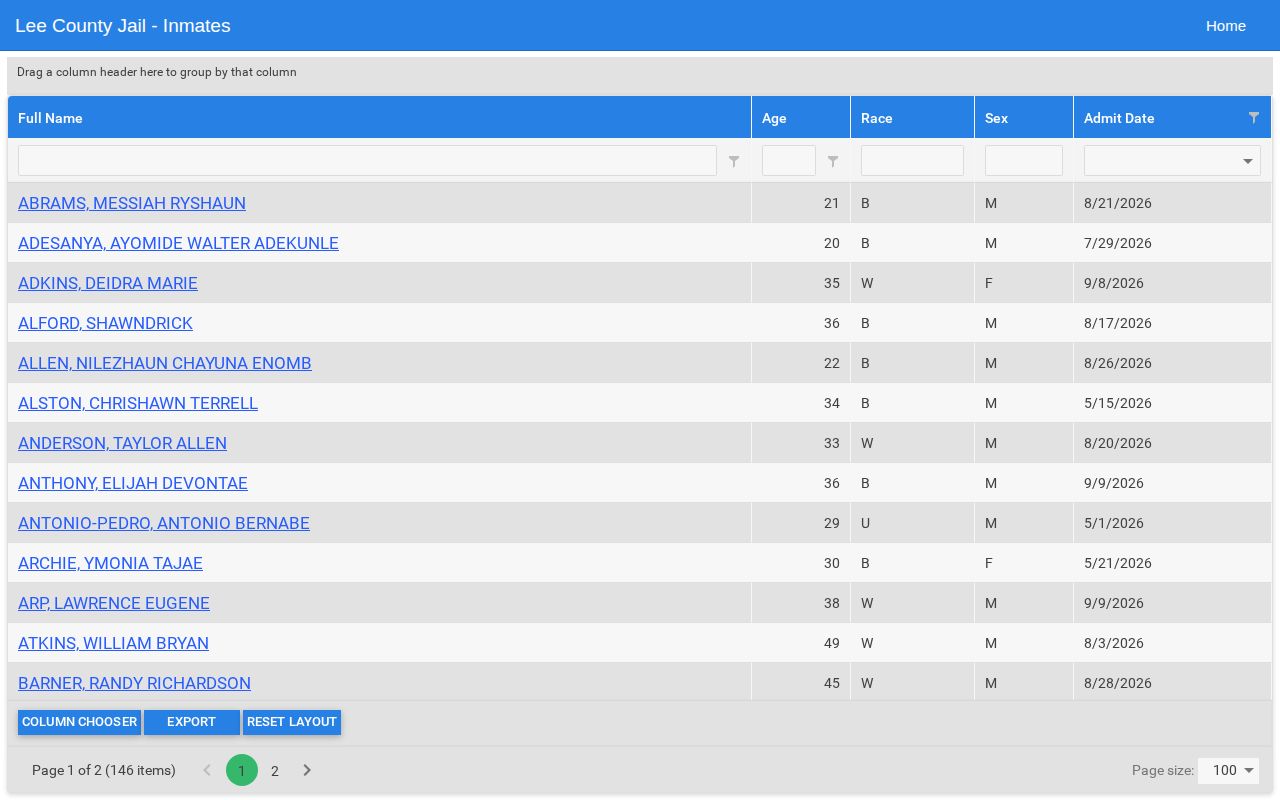
The capture shows why current custody must be distinguished from the one-day admission query.
Lee County Arrest Report Fields
The list gives a quick match. The detail view then adds structured booking, agency, bond, and court fields, though some may sit blank.
| Field | Meaning |
|---|---|
| Name, age, race, sex | Initial identity fields; verify more than a name. |
| Admit date and time | County intake, not necessarily arrest or offense time. |
| Name ID / Local ID | Identifiers useful for matching and requests. |
| Housing / confining agency | Placement information that may change. |
| Charge / offense date | Charge as booked and alleged incident date. |
| Court date / docket | Links the booking to a court case. |
| Bond amount / type | Not proof of payment or release. |
| Arrest / charging agency | Agencies attached to the entry. |
| Photo | No image appeared in inspected county views. |
The portal is no mugshot gallery. A booking photo can exist without being displayed, and Sanford Police runs a separate P2C arrest-event system that does not confirm county custody. The official charge-search view opens another route into county data.
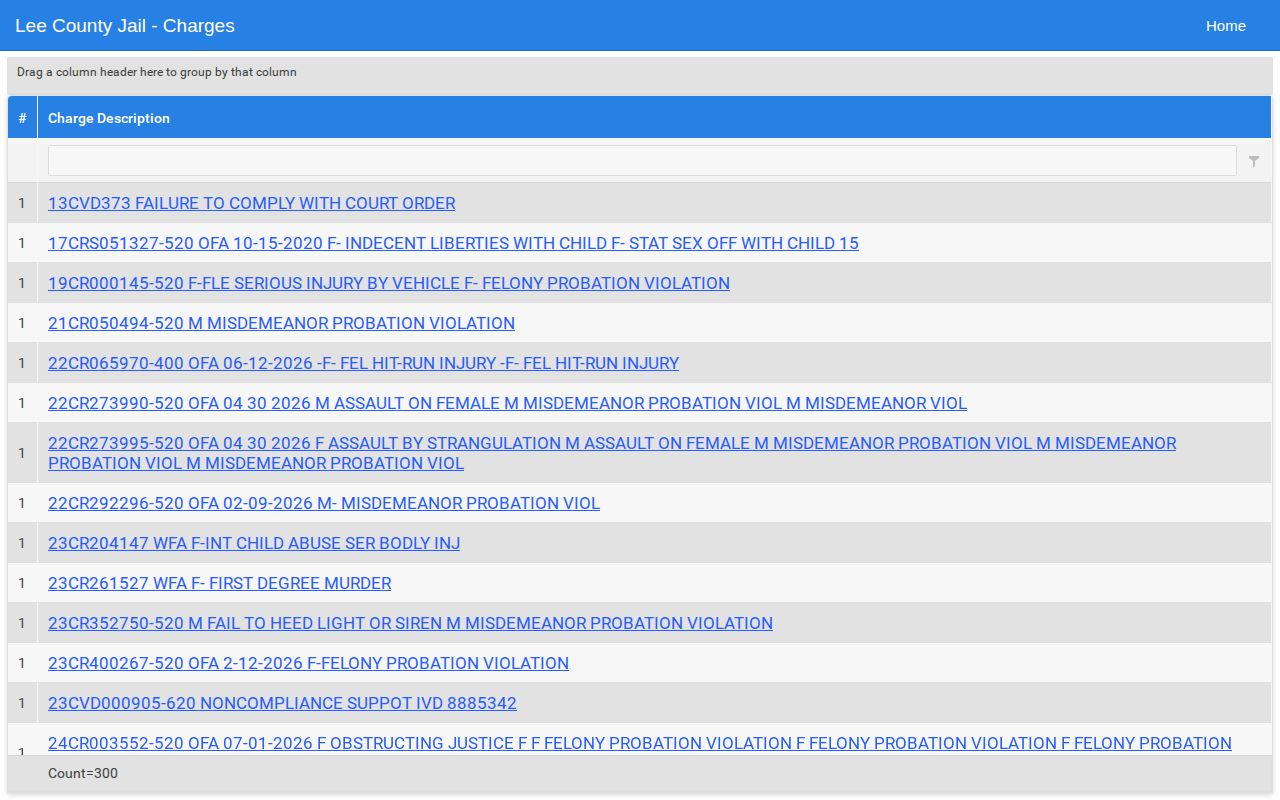
This interface can narrow a same-day inquiry when a common name produces uncertain results.
Why Lee County Arrests Lag
Several steps come before a stable public entry. Identification, intake, data entry, charge review, bond processing, and transfers all take time. The portal displays no last-updated stamp. So no one can promise every arrest appears within minutes or by a fixed hour. If a record rolls off Current, check Released. Absence there still will not say whether bond, recognizance, transfer, or another event caused the change; the detail record and court source have to answer that.
- Booking
- Jail intake and the record made at admission.
- Bond
- A release condition; a listed amount does not prove payment.
- Disposition
- The court’s later resolution of a charge.
- Transfer
- Movement to another agency or facility.
Note: A one-day admission query leaves out every police incident, citation, or unbooked arrest event in Lee County.
Verify a Missing Lee County Arrest
Search Current first. Then check Released. Custody questions go to the jail at 919-718-4567. If the portal lacks the record or photo you need, use the Lee County public-record request form. Give the name, approximate date, and agency. Add any local ID, docket number, and the exact item wanted. The Sheriff’s Office main number is 919-718-4560, the county lists no booking-photo fee or set turnaround, and you can ask the legal basis for anything withheld. For later custody changes, the VINELink Inmate Check explains NC SAVAN and its limits.
Lee County App Is Not Roster
The Lee County NC Linked app lists county services. No jail lookup, no booking photos, no arrest alerts. It cannot replace the detention portal. The Sheriff’s Office page also notes that Facebook is not monitored, and its arrest-blog links no longer work. Social posts are not custody confirmation, so the live portal, a phone call, and a records request remain the reliable route.
Lee County Charges Need Court Review
A charge can still change in court. It may be reduced, dismissed, amended, or resolved later. That is why the docket matters.
Admit time clarifies when intake happened. Agency fields show who made the arrest or filed the charge, and the docket points toward court, facts best read without assumptions.
Current Versus Released Arrest Records
Lee County splits its roster into two views. Current is a live custody label. Released covers people no longer held. Someone freed the same day vanishes from Current fast, so search both near the edge of the one-day window. A quick release is easy to miss that way. Neither label tells the whole story. Released does not name the cause, whether bond, recognizance, transfer, or something else, unless an official source says so. Court Type, Court Date, and Docket Number tie the booking to the later proceeding, while Housing Location is temporary and can shift. The county’s released-inmate view is the official second route.
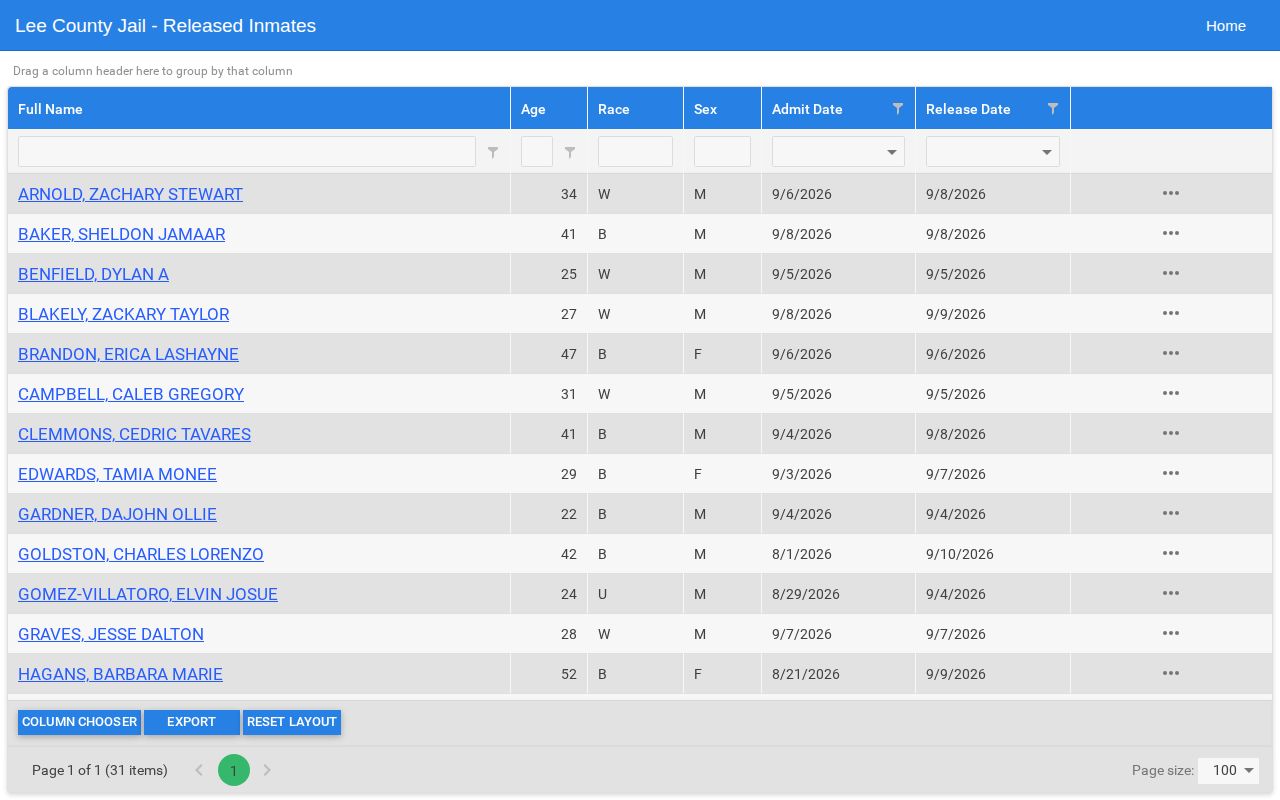
Lee County keeps two separate views of its jail data. One shows who is in custody right now. The other lets you search for people who were booked and released. Treating those views as the same thing causes confusion, so keep them apart.
What if an arrest record no longer appears online? That does not mean Lee County destroyed it. Online display and agency retention are two different things. A released arrest may drop off the roster yet still sit in the county's files. Request it directly.
When you make that request, be narrow. Give the date, the name, and enough detail to pin down one booking. Ask for an inmate detail, a charge sheet, or a booking photograph rather than a sweep of every record for a whole month. The released search has no fixed look-back window.
A past county record answers one question. A live VINELink status answers another. The first documents intake. The second tracks current custody. Court data handles disposition. Keeping these layers straight keeps an old booking from being labeled current detention, and a release from being read as the close of a case.